


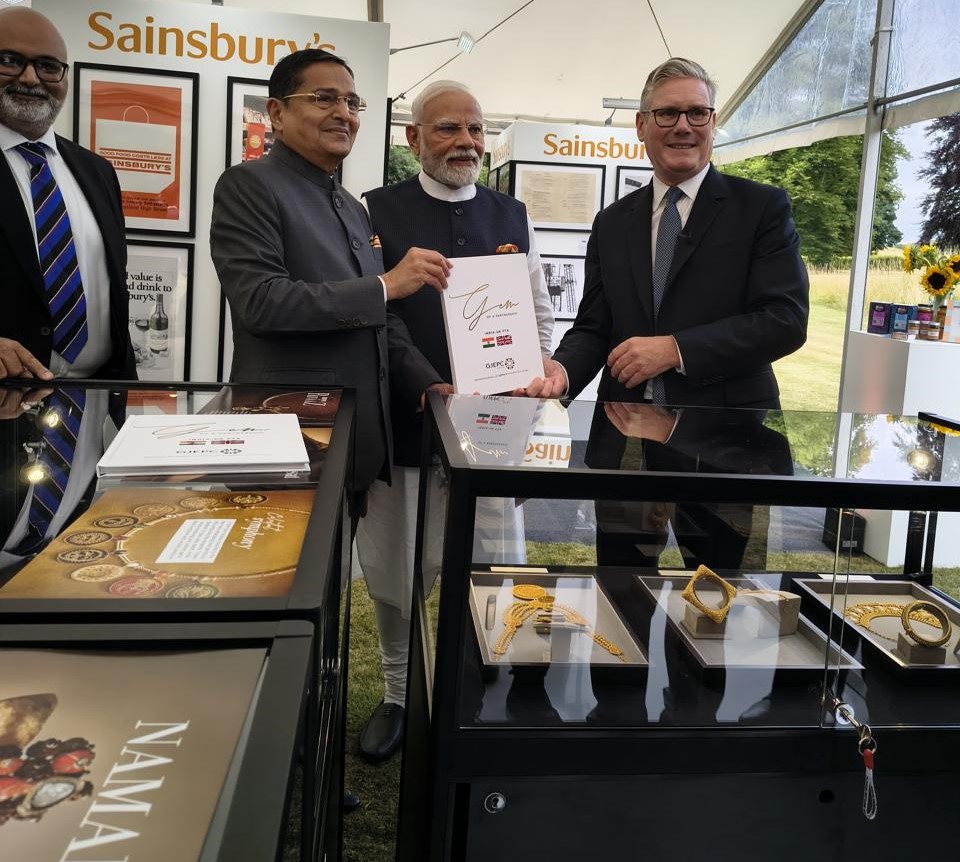
London: India and the United Kingdom signed a landmark Free Trade Agreement (FTA) today; a deal anticipated to open up billions of dollars in trade and investment opportunities for both countries.
The signing came as Prime Minister Narendra Modi made a visit to the UK-his fourth since assuming office in 2014. During the trip, he is scheduled to hold comprehensive talks with British Prime Minister Keir Starmer before departing for the Maldives on July 25.
The India-UK Free Trade Agreement represents a significant milestone in the economic ties between the two nations, following years of complex negotiations. Talks originally kicked off in January 2022 during Boris Johnson’s tenure as UK prime minister, with an initial goal of wrapping up by Diwali that year. Despite several setbacks and delays, the agreement was ultimately finalised in May 2025. PM Modi hailed the deal as a “historic” achievement.
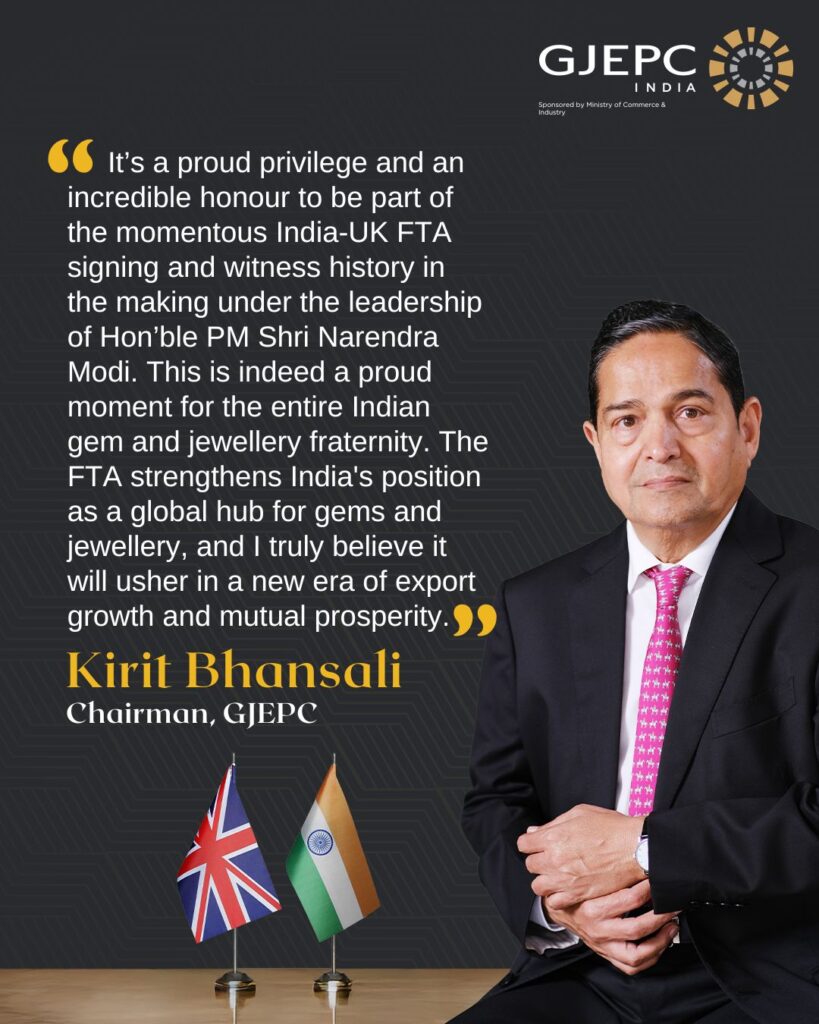
The FTA with UK is expected to boost the export of labour-intensive items such as gems, jewellery, textiles, marine products, leather, footwear, sports goods and toys. According to a statement by the commerce ministry, other key exports like engineering goods, auto parts and engines and organic chemicals are also expected to get a boost.
“India has ensured that non-tariff barriers are suitably addressed to ensure free flow of goods and services and that they do not create unjustified restrictions to India’s exports,” the statement added.
The Gem & Jewellery Export Promotion Council (GJEPC) said the deal could open up better market access, boost exports, and enhance trade relations with the UK. The UK presents a substantial market for jewellery, with annual imports valued at around $3 billion. Currently, India’s share in this market is approximately $400 million, representing about 15 per cent.
Also, eased mobility rules for Indian professionals and streamlined entry for IT companies are set to drive growth in the sector. According to the commerce ministry, the move could benefit more than 60,000 IT professionals each year. Major beneficiaries include TCS, Infosys, Tech Mahindra, HCL Technologies, and Wipro.
Apart from this, tariff concessions for Indian tea, spices, and ready-to-eat products will improve market access.