


Mumbai: Gold entered the second half of 2025 following an exceptionally strong performance in the first six months of the year, with prices rising 26%. This surge was driven by a weaker US dollar, ongoing geopolitical tensions, strong investor interest, and sustained central bank buying, according to the World Gold Council’s (WGC) mid-year outlook released on Tuesday, July 15.
While some of these factors are expected to persist, the outlook for gold remains closely tied to broader macroeconomic developments, including trade disputes, inflation trends, and shifts in monetary policy.
Market consensus points to a relatively stable end to the year for gold, with moderate upside potential, assuming current macro conditions continue. Additional support may come from new institutional investors, such as Chinese insurance firms. However, heightened geopolitical or geoeconomic instability—especially in the form of stagflation or recession risks—could drive gold prices significantly higher, as investors seek safety.
Conversely, if the global trade environment normalizes—though unlikely in the near term—higher yields and increased risk appetite could challenge gold’s momentum. A sharp drop in central bank gold purchases beyond current projections could also weigh on prices.
“Despite the challenges of forecasting the global economy, we believe gold remains well-positioned—on the basis of its fundamentals—to play both tactical and strategic roles in investment portfolios,” the report concludes.
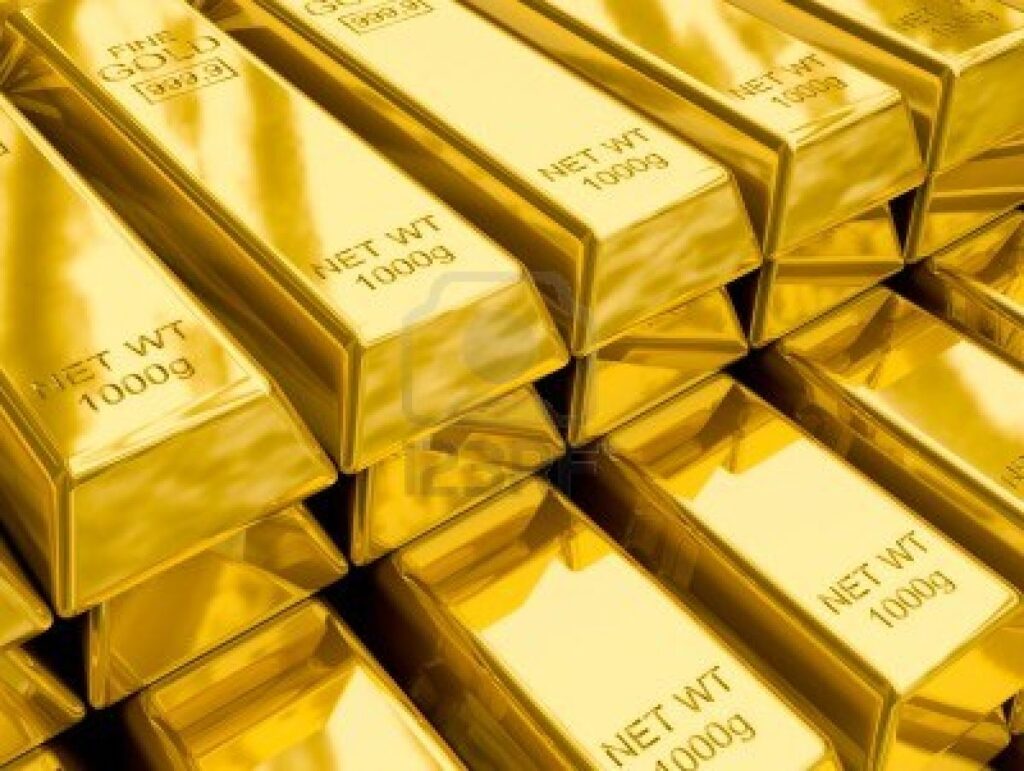
The first half’s 26% rally in dollar terms was fueled by a mix of a weaker greenback, stable interest rates, and an uncertain global economic environment, which spurred demand for safe-haven assets.
Looking ahead, the second half of 2025 is expected to be turbulent. Geoeconomic uncertainties continue to worry investors, with persistent concerns that conditions could deteriorate rapidly. Pressure on the US dollar is expected to continue, and debates around the possible decline of US economic dominance may take center stage. These dynamics may benefit gold, though much of the current fundamentals may already be priced in.
The report also notes that if equity markets continue to rise and geopolitical tensions ease, investors could shift toward riskier assets, reducing gold’s appeal.
To analyze the outlook, the WGC examined gold’s four primary drivers—economic expansion, risk and uncertainty, opportunity cost, and momentum—across three potential scenarios. Current consensus suggests global GDP will remain sluggish in the second half, with inflation likely climbing above 5% globally, as the impact of tariffs becomes more pronounced. US inflation is expected to reach around 2.9%.
Against this backdrop, central banks are expected to cautiously start cutting interest rates, with a likely 50 basis point rate cut by the US Federal Reserve anticipated by year-end. Although some progress in trade talks is expected, overall conditions are likely to stay volatile—especially with continuing tensions between the US and China.
From a technical standpoint, gold’s recent consolidation is viewed as a healthy pause in a longer-term uptrend, potentially paving the way for further gains. Lower interest rates and ongoing uncertainty are expected to support investor demand, particularly through exchange-traded funds and over-the-counter markets. Central bank purchases are also projected to remain strong—though slightly below record levels—still well above the 2012–2021 average of 500–600 tonnes annually.
However, elevated gold prices are likely to suppress consumer demand and could encourage increased recycling activity, which may limit further upside in gold performance, the report cautions.